





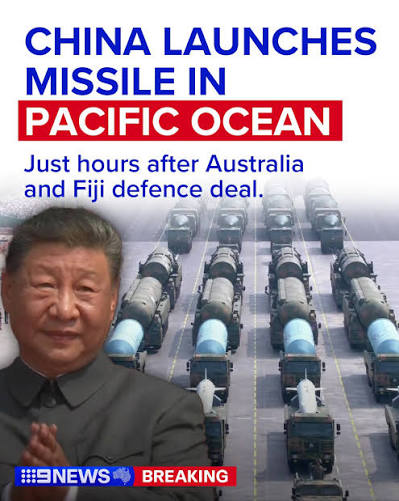
A recent missile test conducted by China in the Pacific Ocean has drawn widespread attention and raised new security concerns across the Asia-Pacific region. The launch, which Chinese authorities described as a routine military exercise, immediately triggered reactions from neighboring countries and international observers who fear that the move could increase regional tensions and reshape the security landscape of Asia. China stated that the missile carried a simulated or training warhead and that relevant countries had been informed in advance. However, several governments still expressed concern over the timing and broader implications of the exercise.
The missile was reportedly launched from a Chinese nuclear-powered submarine into designated waters in the Pacific Ocean as part of annual military training activities. According to official statements from Beijing, the launch was not aimed at any specific nation and complied with international law. Chinese officials emphasized that military exercises of this kind are normal for major powers and should not be interpreted as aggressive actions. Despite those assurances, the event quickly became a major topic of discussion among defense experts and regional leaders.
Many analysts believe the concerns go beyond the missile launch itself. The Asia-Pacific region has become one of the most strategically important areas in the world due to rising competition between major powers. In recent years, tensions involving territorial disputes, military alliances, and naval activities have increased significantly. Against that background, any large-scale military activity by a powerful country can create uncertainty and concern among neighboring states.
Countries such as Australia, Japan, and New Zealand reportedly reacted cautiously to the development. While some governments acknowledged receiving advance notification about the test, officials still raised questions about transparency and regional stability. They argued that military activities involving long-range missiles could increase anxiety among nations already dealing with complex security challenges.
Security experts point out that military signaling plays an important role in international politics. Missile tests are not only technical exercises; they can also send strategic messages. Such actions can demonstrate technological capability, military readiness, and deterrence power. Even if the stated purpose is routine training, other nations may interpret the move differently based on the political environment and existing tensions.
The Pacific region has increasingly become a center of geopolitical competition. Major countries are strengthening partnerships and expanding their influence through security agreements and military cooperation. China has expanded its military modernization efforts over the past decade, investing heavily in advanced naval systems, missile technology, and defense capabilities. Meanwhile, countries aligned with Western security partnerships have also increased military cooperation and strategic planning.
Some experts believe China’s latest test may be viewed as part of a broader effort to demonstrate its growing capabilities and strategic reach. Modern military forces increasingly depend on advanced technologies capable of operating across large distances. Submarine-launched missile systems are particularly important because they can provide mobility and strategic deterrence. Their ability to operate from hidden locations makes them a key element in modern defense planning.
At the same time, critics argue that increased military demonstrations may create an atmosphere of mistrust. When countries perceive growing military power nearby, they often respond by strengthening their own defenses. This process can lead to a security dilemma, where actions intended as defensive measures by one side are viewed as threatening by another. Over time, such cycles can increase tensions and fuel regional competition.
The latest missile test also highlights the challenge of maintaining stability in a rapidly changing security environment. Asia is home to some of the world’s largest economies and busiest trade routes. Any increase in regional instability could have consequences beyond military matters, potentially affecting economic growth, investment confidence, and international cooperation.
Political analysts suggest that communication and transparency will remain critical in preventing misunderstandings. Diplomatic channels often play an essential role during periods of military activity, allowing governments to clarify intentions and reduce the risk of escalation. Advance notifications, military dialogues, and regional security forums can help maintain trust among nations even during periods of strategic competition.
China continues to maintain that its military activities are intended to protect national interests and preserve security. Chinese officials insist that modernization efforts are defensive rather than offensive. However, neighboring countries and international observers will likely continue watching developments closely as military activities in the region evolve.